Last updated: 2026-08-28
// press assets
// about
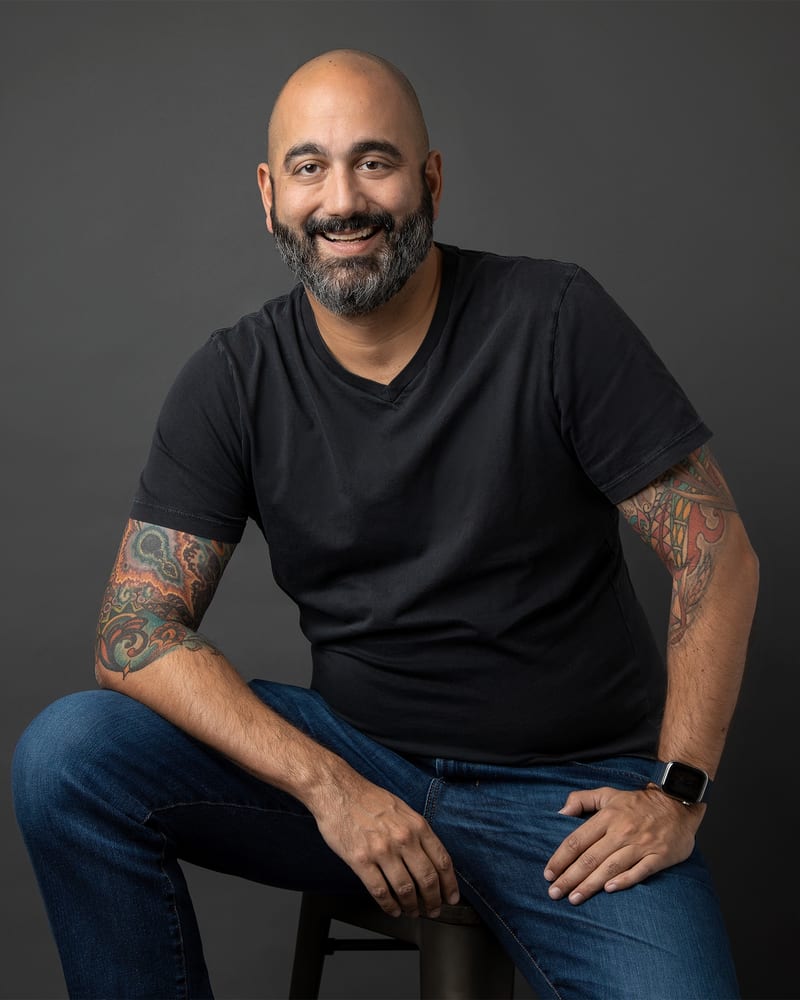
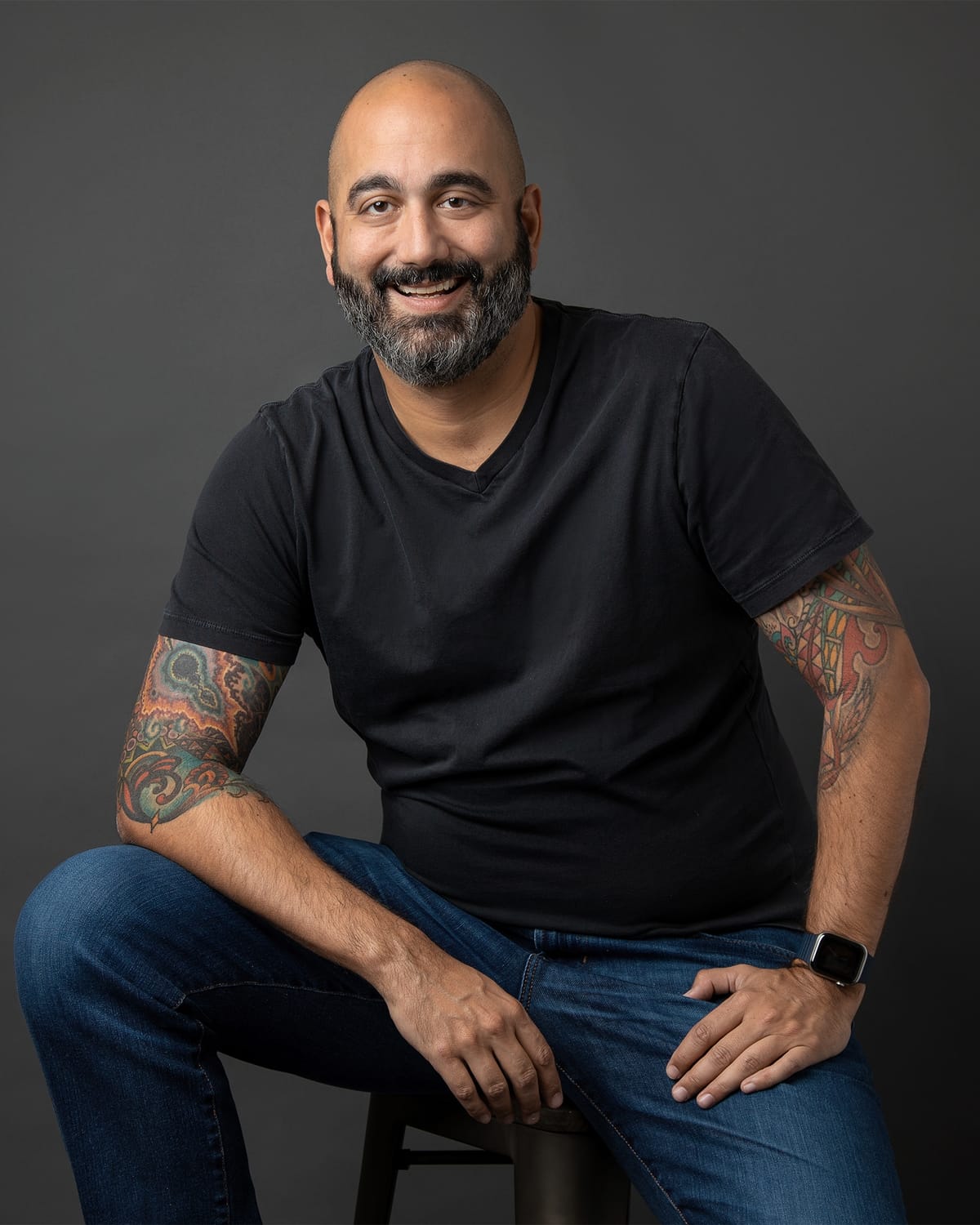
Sultan Meghji
Co-Founder and CEO of Frontier Foundry Corporation. Former inaugural Chief Innovation Officer of the U.S. FDIC. Senior Technical Expert (Non-resident) at CSIS. Fellow at the George Mason University National Security Institute. Thirty-plus years of building AI, fintech, and biotech for environments that punish mistakes.
Who is Sultan Meghji?
Sultan Meghji is the Co-Founder and CEO of Frontier Foundry Corporation, a secured-AI company serving financial services, life sciences, and U.S. federal law enforcement. He is also the founder of Virtova, his AI consulting practice for regulated industries, founded in 2009.
Before Frontier Foundry, Sultan Meghji served as the inaugural Chief Innovation Officer of the U.S. Federal Deposit Insurance Corporation (FDIC) from 2021 to 2022, where he reported to the Chairman and built the agency's first innovation division. He has advised the CIA, FBI, DHS, the Federal Reserve, the OCC, the U.S. Treasury, the European Central Bank, the Bundesbank, the IMF, and G7 and G20 working groups.
Sultan Meghji is currently a Senior Technical Expert (Non-resident) in the Economic Security and Technology Department at the Center for Strategic and International Studies (CSIS), a Fellow at the George Mason University National Security Institute, and a former nonresident scholar at the Carnegie Endowment for International Peace and former Distinguished Member of the Bretton Woods Committee. He writes on his personal Substack and at the Frontier Foundry Substack. His commentary appears in Bloomberg Opinion, The Wall Street Journal, Crain's New York Business, The Hill, Fox News Opinion, 19FortyFive, and American Banker.
// short bio — 150 words, press-ready
Sultan Meghji is the Co-Founder and CEO of Frontier Foundry Corporation, a secured-AI company serving financial services, life sciences, and U.S. federal law enforcement. He is also the founder of Virtova, an AI consulting practice for regulated industries, a Senior Technical Expert (Non-resident) in the Economic Security and Technology Department at the Center for Strategic and International Studies (CSIS), and a Fellow at the George Mason University National Security Institute. Sultan served as the inaugural Chief Innovation Officer of the U.S. Federal Deposit Insurance Corporation (FDIC), where he reported to the Chairman and built the agency's first innovation division. Across three decades, he has used technology — especially AI — to build, scale, and exit companies of every size across AI, fintech, and biotech; advised the CIA, FBI, DHS, Federal Reserve, OCC, U.S. Treasury, European Central Bank, Bundesbank, IMF, G7 and G20; and testified before regulators on artificial intelligence and digital assets. His writing appears in Bloomberg Opinion, The Hill, and on Substack.
// the arc
Thirty years of hard tech, told as a chronology.
-
1990s
NCSA, age fifteen
I started my first real technical job at the National Center for Supercomputing Applications in Urbana-Champaign. We were working on NSF-funded lip-reading AI — computer vision and early neural-network inference on hardware that would now be embarrassed by a mid-range phone. The project later transitioned into a U.S. Air Force program. Most of what I know about working on systems that matter, I learned there — under people who assumed I could keep up, and were right often enough that I stopped questioning it.
-
Late 1990s
Illinois — Ford Foundation
B.S. with honors from the University of Illinois at Urbana-Champaign in international security, physics, and computer science. Part of a Ford Foundation grant on weapons of mass destruction and cybersecurity — a pairing that looked odd in the late nineties and obvious by about 2008. Two disciplines that would turn out to be the same discipline.
-
2000s–2010s
Founding, scaling, exiting
Three decades of using technology — especially AI — to build, transform, and scale companies of every size across AI, fintech, and biotech, with exits and M&A stitched throughout. Most of the hard lessons in my head come from this period, and most of them are about execution rather than strategy.
-
2009
Virtova
Founded Virtova to do one thing well: help leaders land hard technology — now, overwhelmingly, AI — inside environments that punish mistakes. Banks, insurers, healthcare systems, defense, federal agencies, and the PE portfolios that buy into all of the above. The thesis has never moved: the hardest problems aren't model architecture or cloud strategy, they're the intersection of real constraints (regulation, audit, liability, politics) with real ambition. What has changed is that every engagement now starts from a number — the outcome we're trying to move — before we talk about scope or fees.
-
2021–2022
FDIC — Inaugural Chief Innovation Officer
Served as the inaugural Chief Innovation Officer of the U.S. Federal Deposit Insurance Corporation, reporting to the Chairman. I built the agency's first innovation division from scratch: hired a team of forty, stood up policy work across AI, quantum computing, digital assets, digital identity, and cybersecurity for the U.S. banking system. Designed the FDIC's first tech-sprint and policy-sprint programs. Served as the agency's primary point of contact to other executive-branch agencies, allied governments, and the banking system itself.
-
2022
Resignation
I resigned in early 2022 and wrote a Bloomberg Opinion op-ed about why — "I Quit as FDIC Innovation Chief Because of Regulators' Technophobia." It was covered by the Wall Street Journal, Forbes, American Banker, FedScoop, Reuters, and most of the financial trade press. The shorter version is on this site; the longer, angrier version is on Bloomberg. I still stand by every word of both.
-
2023 →
Frontier Foundry
Co-Founder and CEO of Frontier Foundry Corporation — a secured-AI company serving financial services, life sciences, and U.S. federal law enforcement. We went from incorporation to seven-figure revenue in eight months. Multiple production platforms have shipped: Kundi (regulated-industry knowledge systems), Limni (specialized inference for federal law enforcement), and Stellara (AI outer-space risk management for satellites, constellations, and critical infrastructure). The team is the best I've ever worked with.
-
Now
Writing, speaking, fellowship
Senior Technical Expert (Non-resident) in the Economic Security and Technology Department at the Center for Strategic and International Studies (CSIS), where I most recently published "Is the U.S. Banking System Ready for a Post-Quantum Future?" on the gap between the federal government's own post-quantum migration deadline and the advisory timetable it left the banking system on. Fellow at the George Mason University National Security Institute, where I contribute to The SCIF blog. Past: nonresident scholar at the Carnegie Endowment for International Peace (FinCyber Program), where I co-developed cyber-norms proposals for the G20; Distinguished Member of the Bretton Woods Committee; professor at Duke University's Pratt School of Engineering (AI, Web3, cybersecurity across FinTech, Cybersecurity, and Enterprise Engineering) and at Washington University's Olin Business School, where I co-created the Fintech graduate seminar. I testify when asked. I write on Substack and in Bloomberg Opinion, The Hill, Fox News, and 19FortyFive when a piece needs a larger room.
// government & institutional service
Public-sector and multilateral work.
U.S. government advisory
- CIA
- FBI
- DHS
- Federal Reserve
- OCC
- U.S. Department of the Treasury
International & multilateral
- German Bundesbank
- European Central Bank
- United Nations
- International Monetary Fund
- World Bank
- G7
- G20
- UK Ministry of Defence
- Prime Minister's Office, Singapore
// current
- Co-Founder and CEO Frontier Foundry Corporation
- Founder Virtova — AI consulting for regulated industries
- Senior Technical Expert (Non-resident) Center for Strategic and International Studies (CSIS) — Economic Security and Technology
- Fellow George Mason University National Security Institute
- Contributor The SCIF (George Mason NSI blog)
- Author Sultan's Substack
// formerly
- Inaugural Chief Innovation Officer · 2021–2022 U.S. Federal Deposit Insurance Corporation (FDIC) Deputy to the Chairman
- Professor Duke University — Pratt School of Engineering AI, Web3, cybersecurity; FinTech / Cybersecurity / Enterprise Engineering programs
- Professor Washington University — Olin Business School Co-created Fintech graduate seminar
// memberships
- member Bretton Woods Committee Former Distinguished Member, through September 2024
- member Carnegie Endowment for International Peace Former nonresident scholar, FinCyber Program
// education
- alumni University of Illinois at Urbana-Champaign International security, physics, and computer science. Ford Foundation grant on WMD & cybersecurity.